

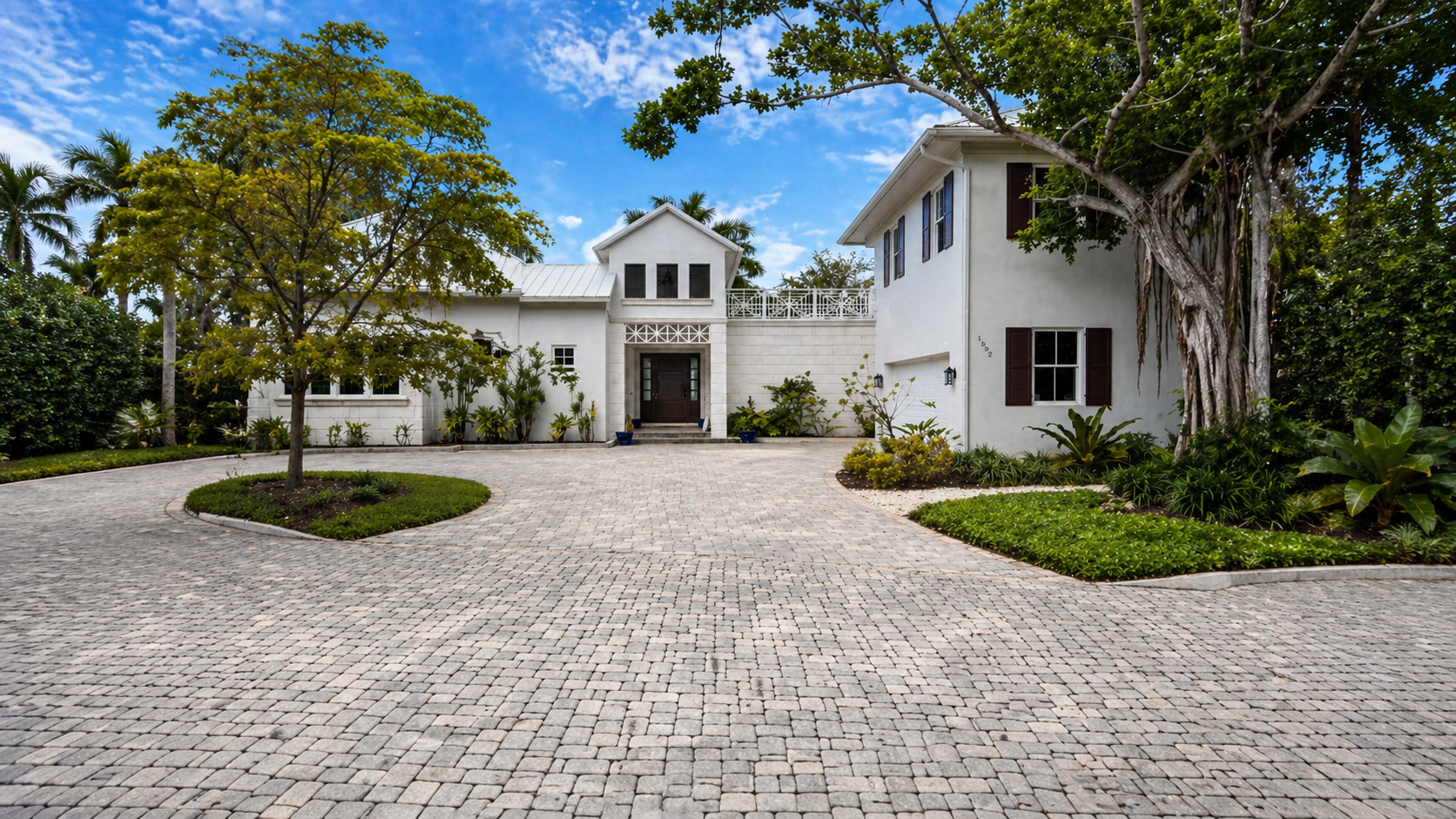
Project Snapshot
-
Location: Oyster Bay Landings, Sarasota, FL
-
Square Footage: 4,030 SF
-
Project Type: Luxury Custom Home
-
Key Features: Impact-rated window walls, integrated outdoor kitchen, pool deck, open-span interior layout, high-end finishes
Project Overview
The Oyster Bay Landings project is a structural showcase of modern residential engineering. The design requirements called for an open-span floor plan with extensive floor-to-ceiling glass to facilitate a seamless transition to the outdoor living area. To achieve this, the build required significant structural steel integration to support the roof loads without the use of interior columns. The project also featured a high-spec outdoor kitchen and pool deck that required precise utility integration within the structural slab.
The Challenge: Zero-Threshold Transitions and Structural Deflection
The architectural intent required a “zero-threshold” transition between the interior living space and the pool deck. This means the finished floor inside must sit at the exact same elevation as the outdoor pavers. Achieving this in a coastal environment is a significant technical hurdle. You must prevent water intrusion during Sarasota’s heavy rain events without using a traditional raised door sill.
Additionally, the “massive windows” required several 20-foot clear spans. In a standard build, these spans would require heavy interior columns. To maintain the open layout, we had to use oversized structural steel headers. However, if these headers deflect (sag) even a few millimeters under the weight of the roof, the glass sliders will bind and fail to operate. We had to engineer a solution that accounted for dead loads before the glass was even installed.
The Strategy: Precision Slab Engineering and Pre-Cambered Steel
We addressed these technical challenges with a focused engineering and sequencing plan:
Dual-Stage Slab Recessing and Linear Drainage
We utilized a dual-stage pour for the structural slab. We engineered a precise 2-inch recess at the building’s perimeter to house a custom-integrated linear trench drain. This system sits flush beneath the sliding door tracks. It allows water to bypass the interior floor and exit through a hidden drainage network. This satisfied local building codes while achieving the client’s “flowing” floor design.
Pre-Cambered Structural Steel Headers
To prevent glass binding, we used “pre-cambered” structural steel beams for the largest window openings. These beams are manufactured with a slight upward arch. As the full weight of the roof and hurricane-rated roofing material was applied, the beams settled into a perfectly level position. This proactive deflection management ensured the window tracks remained perfectly plumb and level.
Integrated MEP and Low-Voltage Infrastructure
Open-concept homes offer very few interior walls to hide mechanical, electrical, and plumbing (MEP) lines. We utilized our comprehensive BIM (Building Information Modeling) process during the pre-slab phase. We mapped every conduit and plumbing run within the structural slab with sub-inch precision. This prevented the need for unsightly “furr-downs” or dropped ceilings later in the project. It preserved the 12-foot interior ceiling heights throughout the home.
Conclusion
The Oyster Bay Landings project was a success because we prioritized structural tolerances early. By engineering for deflection and slab-level transitions during the shell phase, we avoided the mechanical failures common in large-scale custom builds. The result is a high-performance home where the architectural intent is supported by sound structural execution.
Ready to start your own high-performance custom home? Contact our team today